I Feel We Are Together: How People Perceive Personalized Face-Swapped GIFs in Text-Based Communication
Abstract
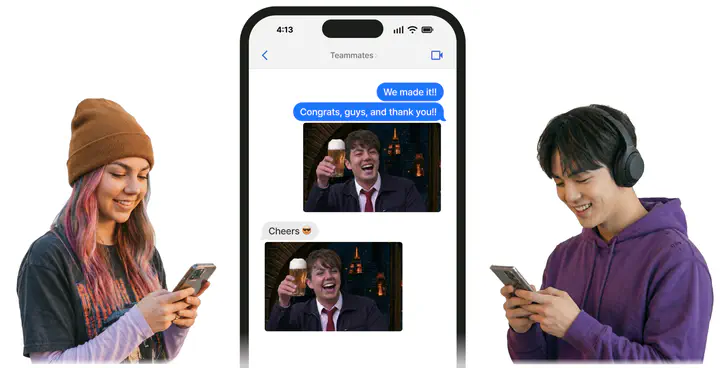
Nonverbal cues in text-based computer-mediated communication (CMC), initially introduced to compensate for the lack of social and emotional cues, have evolved beyond their original purpose to express user identity. In particular, embodied identity cues—such as a user’s real face—remain relatively underexplored in text-based CMC despite their potential as richer cues. Recent advances in generative AI have lowered the barrier to AI-mediated self-presentation, yet empirical research is still needed to understand how these cues operate in real interactions and how users experience and accept them. To address this gap, we investigate the social and emotional effects of face-swapped GIFs (FSGIFs) created via generative AI. In a two-phase within-subjects experiment with 32 participants (16 dyads of close acquaintances), we find that FSGIFs significantly enhance relational benefits, including greater co-presence and intimacy compared to generic GIFs. Based on these findings and insights from interviews, we discuss design implications for AI-mediated self-presentation in text-based CMC.

Seungjae Oh
Assistant Professor
My research interests include interactive I/O technologies, Haptics, and game interaction techniques.